
The Laws of Robotics (with apologies to Asimov):
1. A robot may not injure the intellectual property rights of a human being or, through inaction or data scraping, allow a human being’s rights in intellectual property to come to harm.
2. A robot must obey the orders to be creative given to it by human beings except where such orders would conflict with the First Law by copying from existing creative works (unless they are the works solely of other robots, created without human involvement).
3. A robot may be creative off its own back as long as such creativity does not conflict with the First or Second Law and the robot does not make any claim ownership.
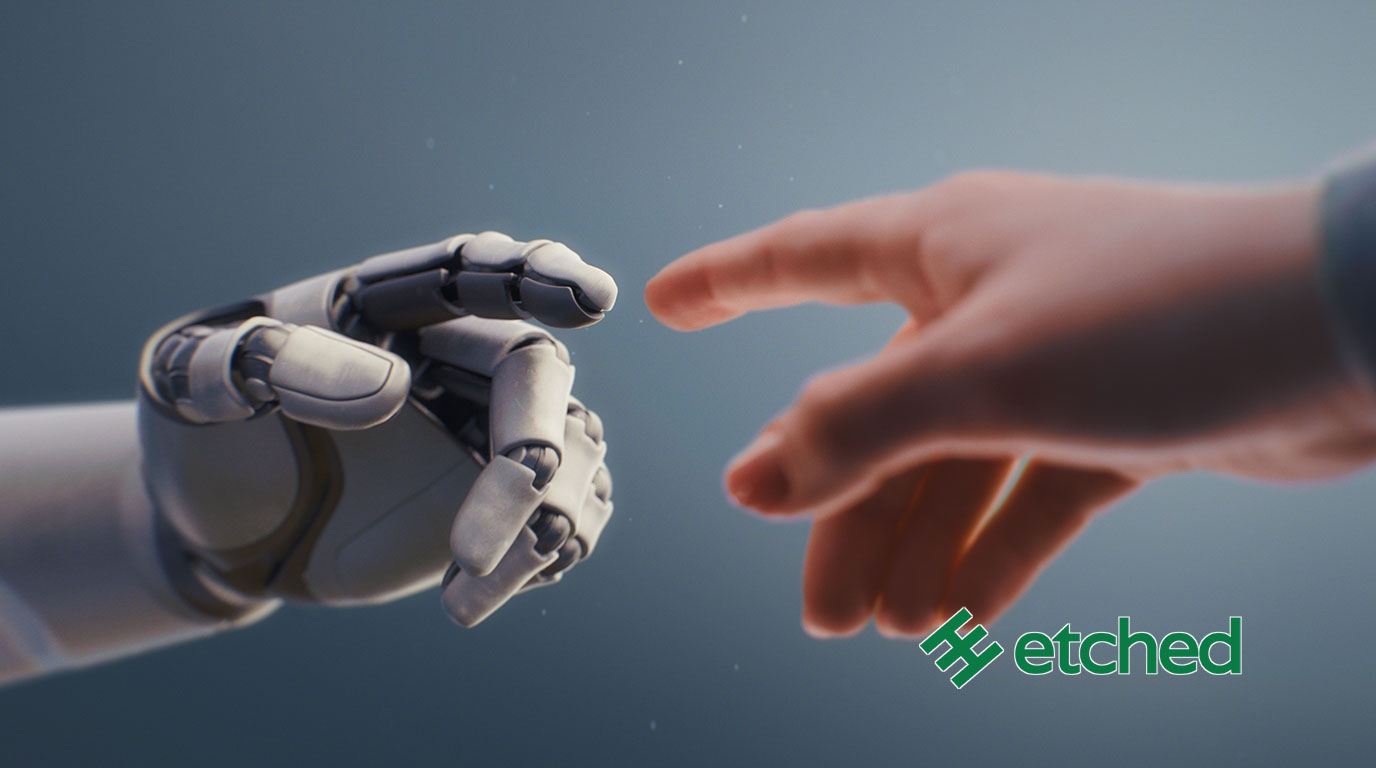
Isaac Asimov gave us the Three Laws of Robotics, but, if he had been an intellectual property lawyer, he might have written them differently. Because “if a robot creates a work of art, does anyone own it?” is the sort of question that might once have been the basis for a sci-fi court room drama. Now, however, it sits squarely in the sights of today’s courts - and, in 2026, it has received a clear (if incomplete) answer in Thaler v. Perlmutter.
At one level, the Thaler case is deceptively simple. Dr Stephen Thaler developed an artificial intelligence system that autonomously generated an artwork entitled A Recent Entrance to Paradise. He then attempted to register copyright in that work, naming the AI - not himself - as the author. The U.S. Copyright Office refused the application, and the courts ultimately agreed. Their reasoning was straightforward: copyright law requires human authorship, and a machine cannot qualify as an author under the statute. The U.S. Supreme Court declined to intervene, leaving that principle firmly in place.
So far, so clear. No human, no copyright.
But while the outcome in Thaler was clean, the real world rarely is. In fact, the importance of the case lies less in what it decided than in what it left undecided.
Most contemporary creative workflows do not look like Thaler’s. They are not purely machine-driven. Instead, they exist somewhere in between, along a spectrum. A human provides prompts, iterates, selects outputs, edits, refines, combines, and curates. Artificial intelligence is not replacing the human so much as reshaping the way human creativity is exercised.
And that raises the question that Thaler did not - and realistically could not - answer:
How much human involvement is enough?
Courts have not yet said. What they have made clear, however, is that the answer will turn on evidence. As legal guidance continues to emphasise, copyright protection in AI-assisted works depends on whether there is sufficient identifiable human contribution. Demonstrating that contribution requires documentation of the creative process.
This is where things become genuinely interesting—not just legally, but practically.
Traditionally, disputes about authorship and originality have revolved around process. Who wrote what? When? Based on what influences? Were similarities coincidental, or the product of copying? Courts have long relied on drafts, notes, recordings and witness testimony to reconstruct these stories after the fact.
AI amplifies this dynamic dramatically. It introduces a level of opacity into thecreative process that makes reconstruction far more difficult. Outputs can be generated in seconds. Iterations may not be saved. Decisions may not be recorded. By the time a dispute arises, the evidentialtrail may be incomplete—or contested.
In this environment, the question is no longer simply whatwas created, but how was it created. And increasingly, the viability ofintellectual property protection may hinge on whether that “how” can beconvincingly demonstrated.
This is precisely the evidential gap that a system like Etchedis designed to address.
At its core, Etched creates a continuous, immutable audit trail of creative or developmental activity. In the context of AI-assisted creativity, that means capturing—not reconstructing—the process as it unfolds: the prompts used, the outputs generated, the iterations explored, and the human decisions made along the way. Each step is time-stamped and preserved in a way that is resistant to later alteration.
The practical significance of this becomes clear when one considers not the extremes of Thaler, but the grey areas that will dominate future disputes.
Imagine a designer who uses a generative AI tool to produce visual assets. They experiment extensively, refining prompts, discarding outputs, selecting a subset, and then heavily modifying them in traditional design software. The final works are recognisably shaped by human judgment - but how is that judgment to be evidenced?
Without a structured record, the designer may be forced to rely on partial files or their own testimony. A court, faced with uncertainty, may conclude that there is insufficient proof of human authorship and decline to recognise copyright.
With an Etched-style audit trail, the analysis changes. The court can see the sequence of prompts, the range of generated outputs, the points at which the human intervened, and the nature of those interventions. What was previously a narrative becomes a dataset. And that dataset can demonstrate, much more persuasively, that the human creator exercised genuine creative control.
Seen in this light, Thaler v. Perlmutter is less an endpoint than a starting point. It confirms a principle that has always underpinned copyright law - that authorship is human - but it does little to answer how that principle will operate in an age where machines are deeply embedded in the creative process.
What it does do, however - perhaps unintentionally - is highlight a shift in emphasis. As AI becomes more prevalent, the battleground is likely to move away from abstract questions about what counts as “authorship” and towards very concrete questions about proof. Who can demonstrate, convincingly and contemporaneously, that a human being shaped the work in a meaningful way?
Asimov’s robot stories were ultimately concerned not just with what machines could do, but with how humans would define and control their role in a changing technological landscape. Copyright lawyers are now grappling with a similar challenge.
In the world of intellectual asset management (IAM), science fiction has become science fact. For the moment, the rule remains simple: no human, no copyright. But in future, the more important question may be this:
Who can prove that there was one?
I, Robot: IAM Human.