
Inspired by David Hartley’s analysis of The Beatles’ “A Day in the Life.” [youtube.com]
The spark: why a Beatles studio deep‑dive still matters
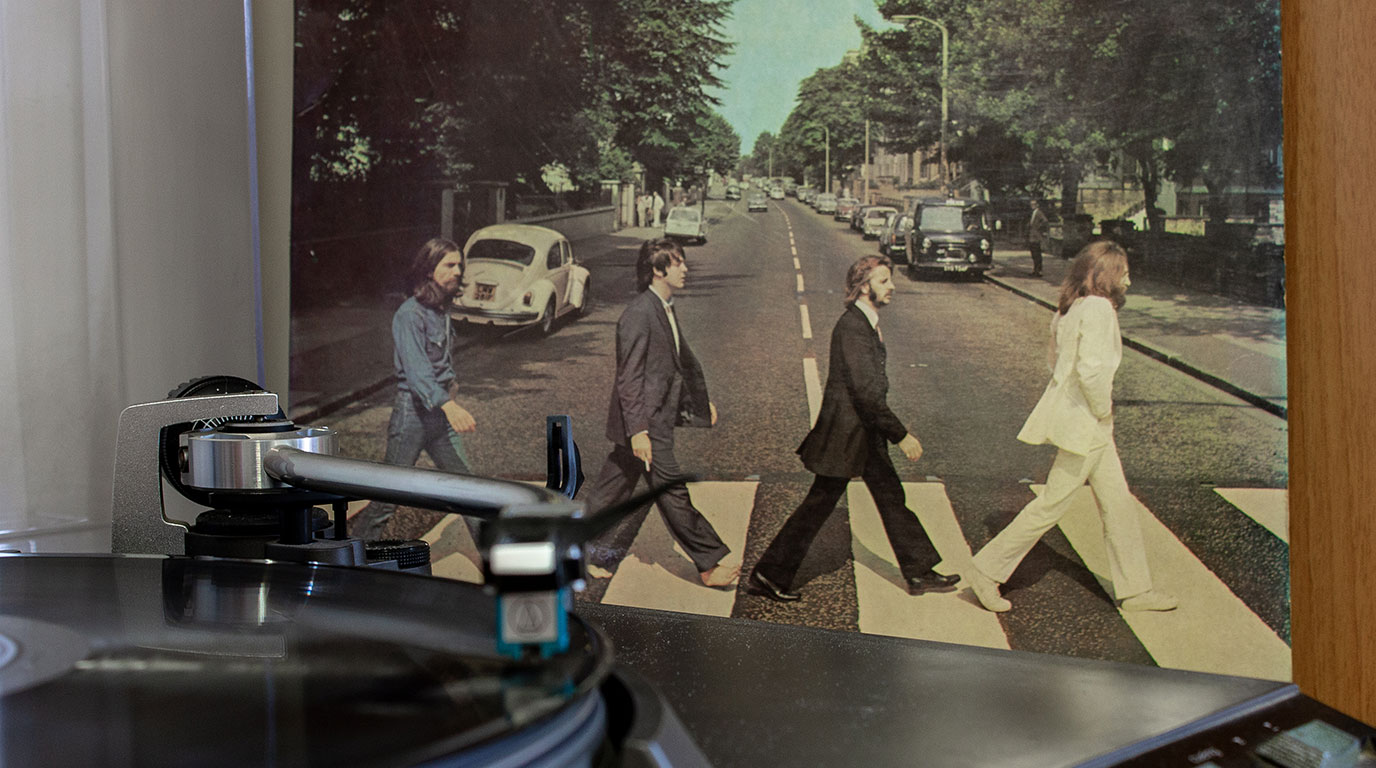
In his video essay “The world’s greatest song that simply shouldn’t exist,” David Hartley dissects how “A Day in the Life” fused disparate sketches, bold production ideas, and on‑the‑spot experimentation into a landmark recording. What stands out is not just the song’s beauty, but the process: fragments stitched together, orchestral swells conceived as a studio event, and creative decisions that could easily have been lost in undocumented studio lore [youtube.com].
Historical sources underline that this track came to life through a maze of rehearsals, partial takes, counting bars to fill gaps, and sound‑design hacks (like heavy echo in Lennon’s cans) — decisions captured in engineer notes and recollections decades later [beatlesbible.com], [en.wikipedia.org].
Now imagine that same creative journey today — but with Etched® preserving every sketch, stem, and decision as encrypted, time‑stamped tokens on a blockchain, providing both privacy and verifiable provenance. That’s the leap this post explores.
Why process-proof matters more than ever
Music creation is rarely a clean, single file. It’s:
- lyrical drafts, voice‑notes, MIDI sketches
- session files, stems, and revision after revision
- collaborators moving parts between laptops, cloud folders, and messages
Traditional tools preserve files, but they don’t prove who created what, when, or how a work evolved. Multiple studies and industry write‑ups argue that blockchain’s core strengths — immutability, distributed verification, and timestamped records — can supply that missing layer of process-proof for authorship and collaboration [originstamp.com], [frontiersin.org].
The premise of Etched® fits that need: tokenise each artefact, encrypt it for confidentiality, and anchor its fingerprint to an immutable ledger. The result is a portable, third‑party verifiable record of the creative journey — not just the final master.
What Hartley’s Beatles breakdown suggests about today’s workflows
Hartley shows how small studio choices snowball into signature moments — the alarm‑clock segue, the orchestral build, the way Lennon uses echo rhythmically while singing. These are collaborative, time‑bound micro‑innovations [youtube.com], [beatlesbible.com].
If a modern team captured that kind of evolution on Etched®, they would have:
1. Verifiable timeline of drafts
Each demo, bar‑count test, or orchestration idea becomes a time‑stamped token — proof of existence at each stage, independent of any one storage provider [originstamp.com].
2. Attribution across collaborators
Tokens are tied to contributors, so it’s clear who added a motif, engineered a sound, or cut a new arrangement. Academic and industry analyses point to blockchain’s value in rights attribution and value co‑creation across multi‑actor networks in music [emerald.com], [setjournal.com].
3. Encrypted sharing with chain-of-custody
You can share a draft securely while preserving a cryptographic trail — a critical upgrade over emailing DAW zips or sending private links. Research on blockchain + IPFS architectures for music copyright systems reinforces how evidence storage and integrity can be handled without exposing the content publicly [frontiersin.org].
Practical use cases for Etched in the studio
1) Compositional journaling — made verifiable
- Tokenise every voice memo, lyric edit, and “take_04_mixB” as you go.
- If a dispute arises later (“Who wrote that middle‑eight?”), you have cryptographic, third‑party verifiable timestamps. Industry guides on music timestamping consistently cite hashing + blockchain anchoring as a fast way to establish priority without revealing the content [feedtracks.com], [originstamp.com].
2) Collaboration without ambiguity
- When a co‑writer adds a melody, or a producer tweaks a drum pattern, mint a new token linked to the prior one.
- This creates a provable version graph, supporting transparent credit splits down the line — a theme echoed in sector overviews and case studies on blockchain’s role in music value chains [debutinfotech.com], [emerald.com].
3) Private previews; public provenance
- Share encrypted previews to A&R, labels, or featured artists; retain the public proof‑of‑existence on chain.
- Even if a platform disappears, the on‑chain record remains independently checkable — a commonly cited benefit of blockchain timestamping for creative works [feedtracks.com].
4) Stems, remixes, and session integrity
- Tokenise stems and session files (e.g., Pro Tools, Logic, Ableton).
- If a stem leaks or a remix claims authorship, you can demonstrate the lineage. Technical write‑ups show how content hashes + decentralized storage can back evidence of originality and transaction integrity [frontiersin.org].
“What if The Beatles had Etched®?”
Consider two moments from the “A Day in the Life” story:
- Counting out 24 bars and dropping in the alarm clock — a tiny experiment that becomes iconic.
- Echo‑driven vocal phrasing Lennon hears in his headphones, influencing performance feel [beatlesbible.com].
With Etched®, each experiment could have been a sealed, time‑stamped artefact with contributor tags (Lennon’s phrasing idea; Mal Evans’s count‑in; orchestral ad‑hoc). The resulting provenance would be gold for:
- Credit allocation (PR/marketing narratives and liner notes grounded in verifiable history).
- Rights negotiations (royalty shares that reflect documented contributions).
- Archives & estates (a durable historical record beyond personal notebooks or fragile tapes).
Hartley’s essay becomes, in effect, a case study for why we should capture the creative path — because those moments are the art [youtube.com].
Addressing common questions (and myths)
“Isn’t a cloud drive enough?”
Cloud storage proves a file exists now, not that it existed then — and timestamps can be altered. Blockchain certification adds an independent, tamper‑evident record of the file’s fingerprint at a specific time [feedtracks.com].
“Will I expose my trade secrets by putting music on chain?”
No. Best‑practice systems store a hash (a fingerprint), not the file itself; content can remain encrypted and privately stored, while the blockchain only anchors its proof‑of‑existence and sequence. Peer‑reviewed work on blockchain + IPFS shows how to balance confidentiality with verifiability [frontiersin.org].
“Does this help with collaboration politics?”
It doesn’t replace trust — but it documents it. Case studies and surveys in the music/blockchain literature repeatedly find that immutable provenance supports clearer crediting and reduces friction across stakeholders [emerald.com], [setjournal.com].
A simple Etched®‑powered workflow for music teams
1. Capture
- As soon as you bounce a demo or save a DAW snapshot, mint a private token on Etched®. Add short notes: “bridge idea,” “orchestral mock,” “vocal echo ref”.
- Result: an indexed, time‑stamped trail of creative intent. (Benefits of timestamping for rapid authorship proof are widely reported across music‑creator tools) [feedtracks.com].
2. Collaborate
- Share encrypted access with specific collaborators. Each change mints a new linked token.
- Result: clean, tamper‑proof version history aligned to people and moments — the backbone of fair splits. (Value‑co‑creation research highlights this multi‑actor traceability) [emerald.com].
3. Consolidate
- When you converge on a master, lock in a release bundle (masters, stems, artwork, liner‑note credits).
- Result: end‑to‑end provenance for catalog management and licensing. (Industry overviews note the role of blockchain in rights, metadata integrity, and licensing automation) [debutinfotech.com], [setjournal.com].
4. Disclose selectively
- Keep most artefacts private; surface just enough proof publicly (e.g., the master’s hash + a chain of custody) for future verification.
- Result: privacy for your trade secrets; confidence for partners and future audits. (Hybrid designs with hashes on chain and content off chain are well‑documented) [frontiersin.org].
Further reading & references
- David Hartley, “The world’s greatest song that simply shouldn’t exist” (YouTube) — on the creative construction of “A Day in the Life.” [youtube.com]
- The Beatles Bible: session chronology and techniques used on “A Day in the Life.” [beatlesbible.com]
- Geoff Emerick background (engineer on Revolver, Sgt. Pepper, Abbey Road) for historical context. [en.wikipedia.org]
- OriginStamp’s overview of blockchain timestamping for creative industries (immutability, versioning, neutrality). [originstamp.com]
The bigger picture: beyond one song
Academic and industry sources converge on a simple point: blockchain is not a magic royalty button, but it is a resilient substrate for proof, provenance, and participation. When combined with creator‑friendly UX (Etched’s role), it helps turn process into protected IP — and collaboration into auditable co‑creation [setjournal.com], [debutinfotech.com].
Hartley’s video is a reminder that the moments that make music great often happen between the takes. With Etched®, those moments don’t have to vanish into folklore — they can become part of your defensible, shareable, and monetisable creative record [youtube.com].