

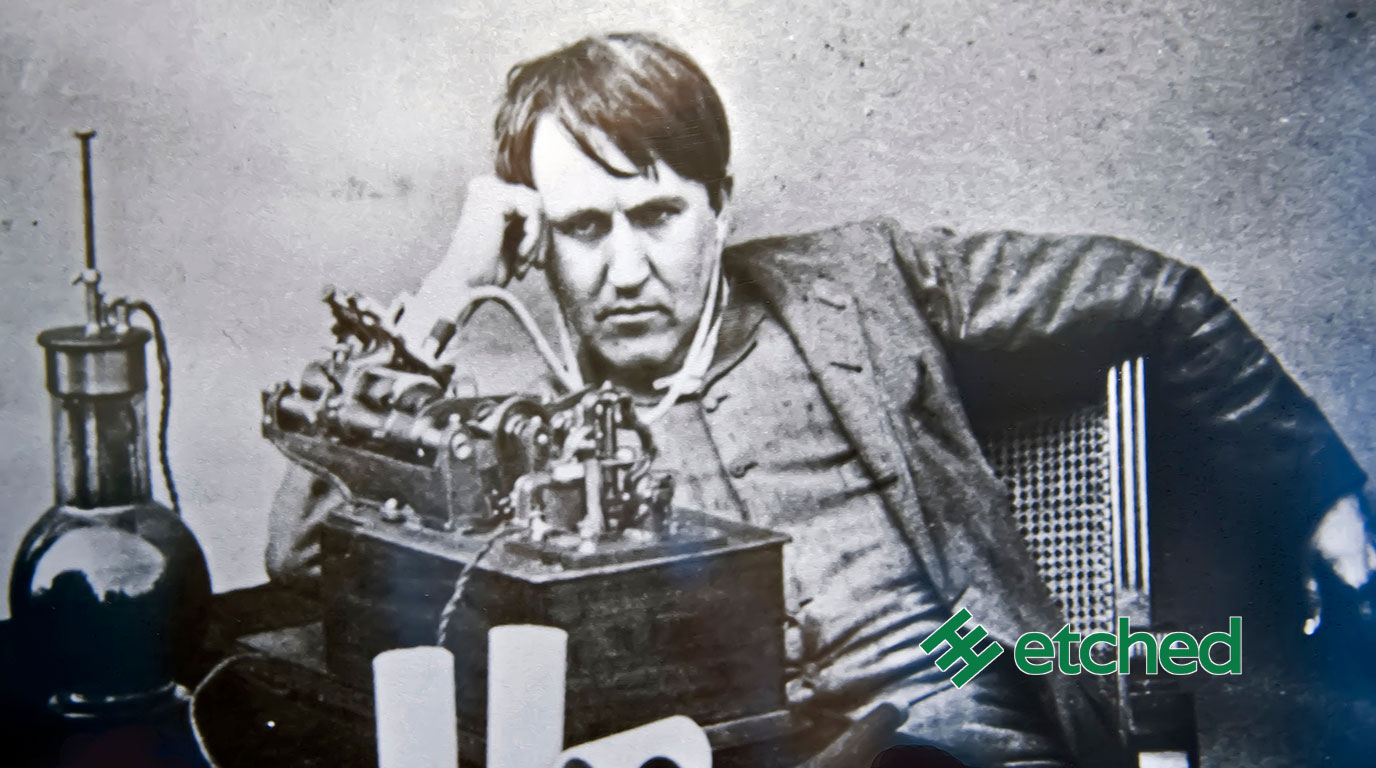
“I make more mistakes than anyone else I know—and sooner or later, I patent most of them.”
— Thomas Edison
In patent law, the hardest part is often not the invention—it’s proving how it came into being.
Across the US, the UK and Europe, patent disputes frequently turn on a deceptively simple issue: evidence. Not just what was invented, but when, how, and by whom.
Patent systems differ in their formal rules, particularly around priority. But when disputes arise, courts and patent offices are remarkably consistent in what they want: contemporaneous records that show the development of an invention over time. Where those records are weak or incomplete, even strong technical cases can unravel.
A Shared Legal Reality
Historically, this was most visible in the United States before the move to a first‑inventor‑to‑file system in 2013. At that time, rights could depend directly on who invented first, and courts relied heavily on documentary evidence to establish:
- conception
- reduction to practice
- continuity of development
But the importance of records did not disappear with that shift.
In the UK and Europe, development records remain central in:
- inventorship disputes
- entitlement proceedings
- derivation challenges
- employer–employee ownership conflicts
- credibility assessments in litigation
Across all three systems, the underlying principle is clear: When facts are contested, contemporaneoustechnical records are often decisive.
The Traditional Tool — and Its Limits
For decades, lab notebooks—whether physical or electronic—have been the default mechanism for documenting invention. In theory, they provide:
- a chronological account of work
- a record of experimentation
- evidence of individual contribution
In practice, they are often the weak point in litigation. Courts routinely see notebooks challenged for:
- alleged backdating
- missing or inconsistent entries
- unclear authorship
- lack of witnessing
- retrospective completion
Even without misconduct, small gaps can create doubt. And once credibility is in question, courts are left reconstructing events from memory and testimony.
That is not a position any party wants to be in.
The Digital Shift — Progress, but Not a Solution
Many organisations—particularly universities—have moved to digital lab books. This is a genuine improvement in usability and organisation. But from a legal perspective, most digital systems remain conceptually similar to their paper predecessors. They still depend on:
- user discipline
- internal controls
- trust in the system operator
And in contentious situations, that distinction matters. Because where records can be questioned, theywill be.
Final Thought
Patent law has always depended on proof as much as invention. The strongest ideas can falter if their development cannot be demonstrated clearly and credibly.
The question that decides many disputes is not: What was invented? : but: Who did what—and when?
In part 2, we will bring you the light bulb moment.